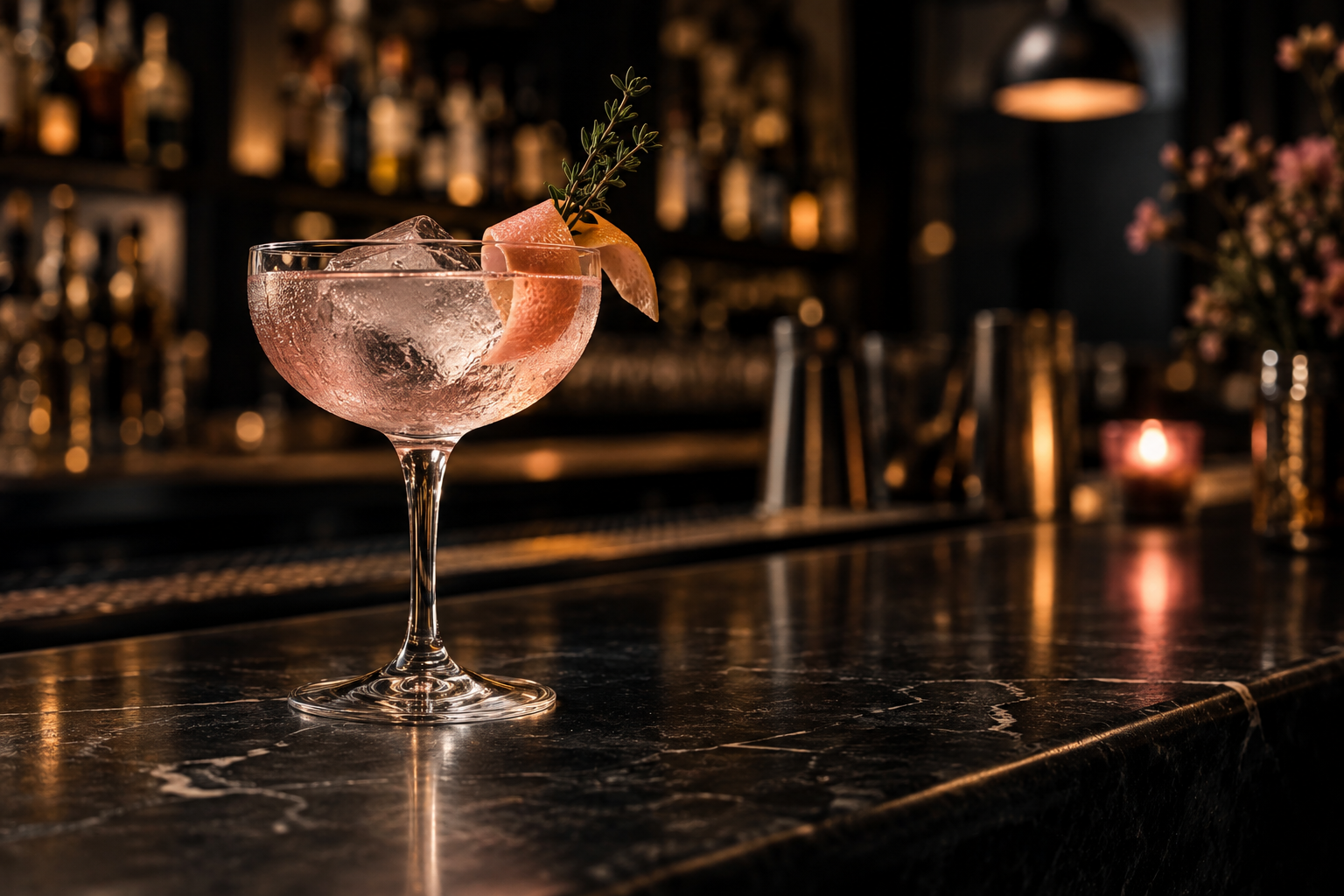
Guests balk at paying spirit prices for a drink with no spirit in it. Here is where the money actually goes.
The guest does the math out loud. Sixteen dollars, and there is no booze in it? It is the most common objection at the bar right now, and it is not a dumb question. It is just aimed at the wrong target. The alcohol was rarely the thing they were paying for, and taking it out does not take out the cost of hospitality.
Start with the liquid, because even there the intuition is backwards. A serious alcohol-free drink is usually built from more parts than a spirit cocktail, not fewer, because the bartender is rebuilding the aroma, body and bitterness the alcohol used to supply for free. A good nonalcoholic spirit is not cheap; by the bottle it can run close to mid-shelf liquor. Add a premium mixer, fresh citrus, a house shrub or syrup that somebody cooked and cooled, bitters, a considered garnish. More components, more prep, more cost.
Then the labor, which is where most of the value actually sits. Sarah Clark, beverage director at Chicago's The Dearborn, does not dress it up.
“It takes a lot of thought and time and effort to create something that checks all the boxes without delivering any alcohol.”
Sarah Clark, VinePair, 2023
She is describing R&D that never shows up on the menu. Someone clarified that juice, dialed that syrup over a half-dozen tries, and figured out how to make a drink taste finished with nothing to hide behind. A zero-proof build is harder than reaching for a classic template, and the guest pays for that skill whether they can see it or not.
So price one out. Say the drink lands at sixteen dollars. Two or three of those dollars are the nonalcoholic spirit and the mixer. Another dollar or two is the house shrub, the citrus, the garnish. Call it four or five in liquid, which is not far off a spirit cocktail. Now the part the guest never counts: the minutes of skilled labor to build it, and the drink's share of everything that keeps the lights on. Because that is the real bill. A bar's largest costs have little to do with what is in the glass. Rent. The team on the clock. Insurance and utilities. Glassware, ice, the whole equipment program. Those are fixed, and they do not shrink because one drink skipped the liquor. A guest who is not drinking still takes a seat for the length of an evening, is served by the same bartender, and enjoys the same room. They are buying the occasion, not the ounces.
Put that together and the math runs the other way: undercharging is the bigger mistake. Bars have leaned on alcohol margins to carry the whole model for a century, so pricing zero-proof drinks like an afterthought quietly taxes the house every time a table orders one, which is exactly the wrong instinct as more guests drink less. It is also why standalone alcohol-free bars have found the economics so unforgiving, even with real cultural wind behind them.
There is a message in the number, too. A six-dollar "mocktail" tells the table the drink was an afterthought and that not drinking makes them a lesser guest. Price it like an afterthought and you have said that out loud before anyone takes a sip. Price it like the drink it is, made by the same hands in the same room, and you have said the opposite. In a moment when a growing share of the table wants that option, that is not manners. It is the business.
You can trace how the alcohol-free drink got this serious, and this expensive, in our timeline.
Sources and further reading
Related in the Zero Proof Guide: The timeline · What replaces alcohol in a cocktail? · The language of drinking without alcohol
Zero Proof Week · November 8–14, 2026
Bring your brand into the category's biggest week.
A seven-day, trade-led content series putting professional bartenders and participating brands in front of the people shaping the category. Brands take part at three levels, from a single feature to headlining the week.
Founding-partner slots are limited for this inaugural year. Questions first? info@licensedtodistill.com