Alcohol does five or six jobs in a glass at once. Pull it out and you have to rebuild every one. Here is how.
Pour a Negroni and take the gin, the Campari and the sweet vermouth back out. What is left is barely a drink: a little orange oil off the twist, the ghost of something bitter, nothing to stand on. That empty glass is the honest place to start, because the alcohol you just removed was never a single ingredient. It was doing five jobs at once, quietly, and a weak zero-proof drink is almost always one where a job went unfilled.
Derek Brown, who built Washington's Columbia Room and then wrote Mindful Mixology, is blunt about the stakes. He builds his alcohol-free drinks without a nonalcoholic spirit anywhere near them, reaching instead for acid, salt, vinegar, brewed tea and aquafaba, often starting from temperance-era recipes older than the craft revival itself.
“It's time for nonalcoholic cocktails to regain their crown. There isn't a difference in my mind.”
Derek Brown, District Fray, 2022
If you take him at his word, the picture comes into focus. You are not shopping for a substitute to drop into the old recipe. You are rebuilding the drink one job at a time. Here is what alcohol was actually doing.
It carries aroma. Most of what we call flavor is smell, and alcohol is volatile, so it lifts aromatic compounds up and out of the glass to your nose. Remove it and the aromatics can sink. This is the hardest job to replace, which is why so much of the category's technical history is really a long fight about aroma. Vacuum dealcoholization and, later, the spinning-cone column both exist for exactly this: strip the alcohol, save the smell it was carrying. Behind the bar the tools are distilled botanical alternatives, aromatic bitters and tinctures, fresh peels and herbs expressed late, and mixers built for aroma rather than sugar.
It adds body. Alcohol gives a drink weight, a certain viscosity, a spine you feel on the palate. Take it away and drinks go thin and watery. You rebuild that with texture: a richer syrup, a measured touch of sugar or glycerin, verjus, brewed tea for tannin, a few grains of salt, a splash of dealcoholized wine. It does not take much. A little viscosity is often the whole difference between a drink that feels finished and one that feels like flavored water.
It brings bitterness. Bitterness is a lot of what makes an adult drink read as adult instead of as soda. It balances sweetness and gives the palate something to push against. The alcohol-free answers here are older than the trend: cocktail bitters, many of them glycerin-based and already alcohol-free, plus gentian, the cinchona bite in tonic, coffee, tea tannin, and the whole aperitivo tradition, which built a durable category on bitterness, color and ritual long before anyone said "zero proof."
It provides length. Alcohol, dilution and carbonation together give a drink its length, the way it opens up and carries. With no spirit in the glass, the mixer stops being a supporting player. It becomes most of the drink. That is why the premium-mixer wave matters so much here: it reframed tonic, soda and ginger beer as flavor and texture systems worth the same care as any base spirit.
It signals a cocktail. The faint warmth of alcohol tells your brain this is a grown-up drink, not a juice. You can send that signal other ways. Heat from ginger, chili or black pepper. A hard line of acidity. A whisper of salt. The temperature, the dilution, the right glass in the hand.
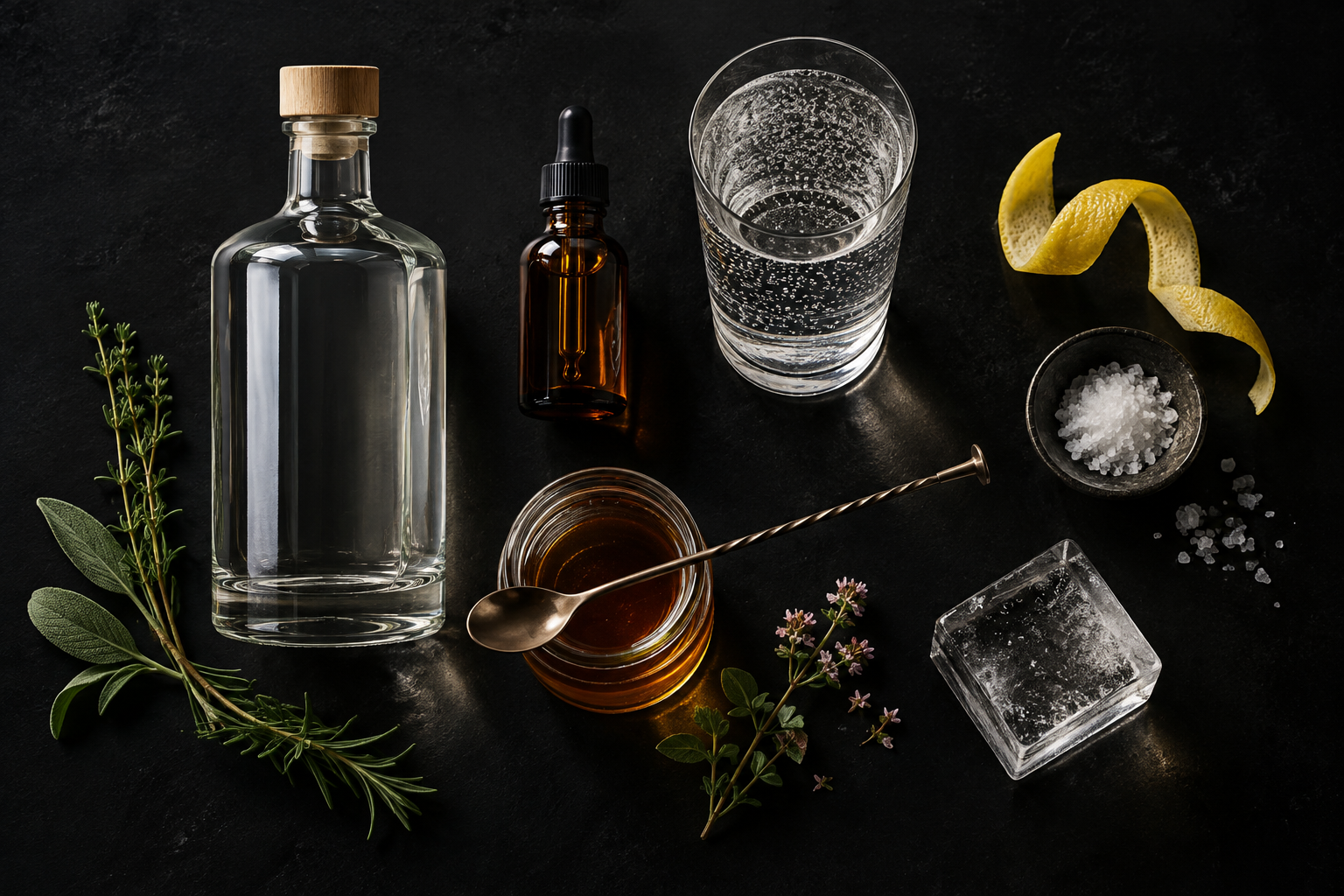
Now go back to that empty glass. Rebuilding the Negroni does not necessarily mean finding a nonalcoholic gin to pour where the gin used to go. It means covering the jobs. Bitterness from a gentian tincture and a good NA aperitivo. Body from a spoonful of rich syrup or a little verjus. Aroma from orange oil expressed late and a few drops of bitters. Length from a little soda, so it lifts instead of sitting flat. The signal from a heavy rocks glass, one big cube, a proper twist. Get those right and instead of making a Negroni with something missing, you have made a bitter, adult, alcohol-free drink that can sit next to the original and hold its side of the table.
None of these tools showed up at once. Distillation, carbonation, dealcoholization, the spinning cone, premium mixers, the aperitivo: they arrived across two centuries, out of different rooms, and the bartender rebuilding that Negroni tonight is quietly using all of them. You can follow each one, and the people behind it, in our timeline.
Sources and further reading
The Spirits Business: Inside the New Wave of Mixer Innovation
Bar and Restaurant: Q&A with Q Mixers Founder Jordan Silbert
District Fray: Dry Out With Derek Brown's Designer NA Cocktails
Related in the Zero Proof Guide: The timeline · The long road to a serious alcohol-free drink · Why a drink without alcohol can still cost $16
Zero Proof Week · November 8–14, 2026
Bring your brand into the category's biggest week.
A seven-day, trade-led content series putting professional bartenders and participating brands in front of the people shaping the category. Brands take part at three levels, from a single feature to headlining the week.
Founding-partner slots are limited for this inaugural year. Questions first? info@licensedtodistill.com