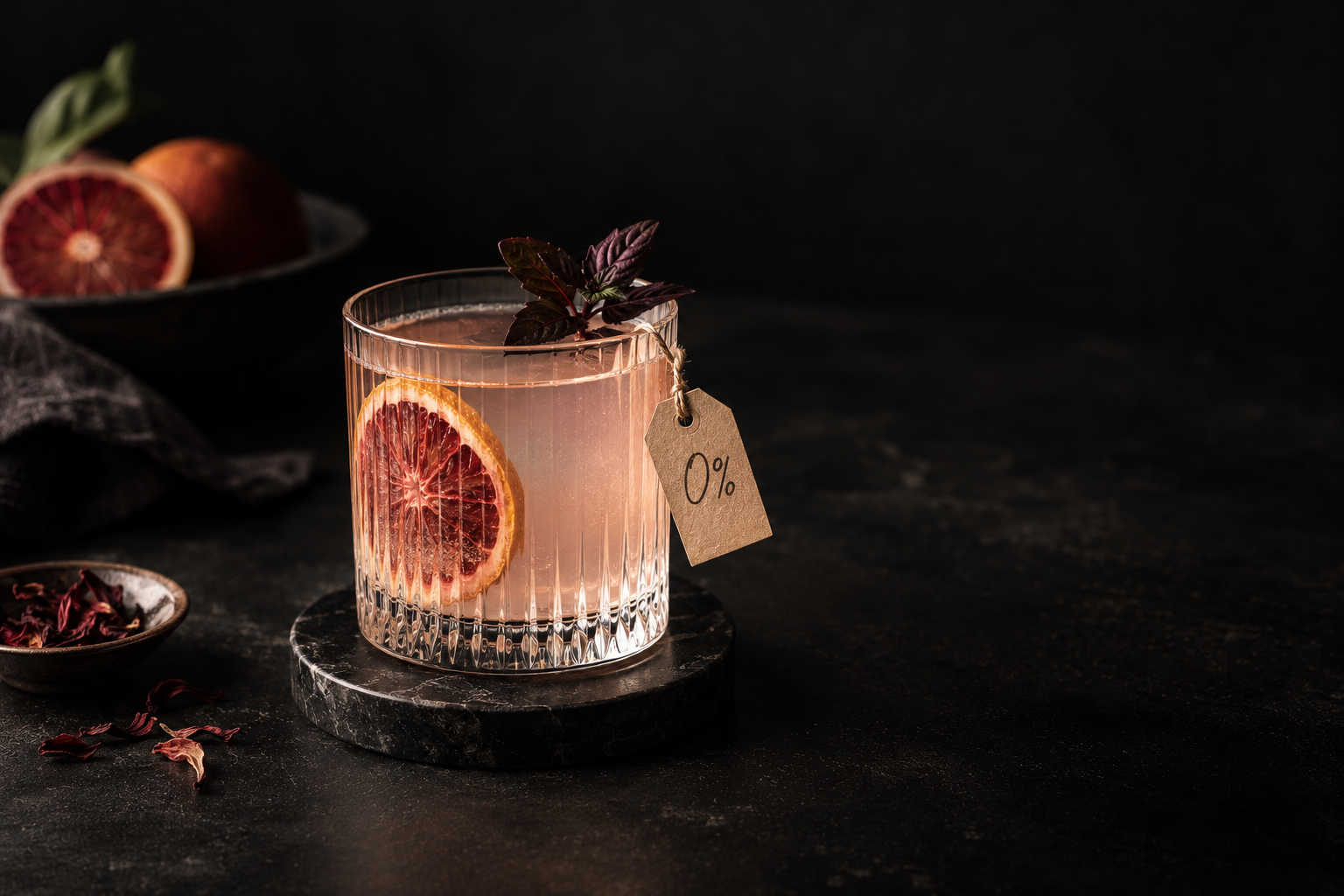
Mocktail, nonalcoholic, 0.0, spiritfree. The words are not interchangeable, and the one on the menu tells a guest exactly where they stand.
“Mocktail” has been in print since 1916, and it has spent every one of those years apologizing for the drink it describes. It is a small, cheerful-sounding word carrying a century of condescension, and the running argument over what to say instead is not pedantry. It is a fight over whether the guest who is not drinking counts.
The word is older than the wellness headlines suggest. "Mocktail" pre-dates Prohibition, and it has never shaken its baggage. Some hear it as playful. Plenty hear the "mock," the imitation, the quiet suggestion that whoever ordered it is settling for a copy. That second reading is why the word still splits the trade a hundred years on. The objection is not academic. Chris Struck, beverage director at ilili in New York, trains his staff to say "soft cocktail" and saves the other word for a specific place:
“for a list of Shirley Temple-esque drinks that might be served at a middle school talent show.”
Chris Struck, Salon, 2023
The joke has a blade in it. The name a bar reaches for tells the guest whether the drink is intentional or an afterthought. So it is worth knowing what the other words actually promise, because they do not promise the same thing. "Nonalcoholic," or NA, is the neutral workhorse, and it is broader than it sounds. In many markets a drink can be labeled nonalcoholic while still carrying a trace of alcohol, up to roughly half a percent, where a stated 0.0 promises none. That gap is not trivia. For a guest who is pregnant, in recovery, on medication, observing a faith, or driving home, the distance between "almost none" and "none" is the entire point. A prominent 0.00% is a specific promise made to specific people, which is why the same bottle gets described two different ways for two different buyers.
"Zero proof" comes at it from the other side, the shelf and the cocktail list. Proof measures alcohol, so zero proof is a clean way of saying there is none while still setting the drink beside spirits instead of beneath them. It reads premium and a little aspirational, which is exactly why the modern category reached for it.
The sharpest intervention came in 2017, when Chicago bartender Julia Momose published her Spiritfree Manifesto, arguing for language that did not define a drink as a lesser copy of something else. "Spiritfree" never unseated "mocktail" in daily speech, but the idea under it held: the words a bar chooses are part of the hospitality, not just a label on the liquid. Call a drink an afterthought and you have told the guest they are one too.
So here is where we land, because this is a place to have a spine. On a menu that takes itself seriously, "mocktail" is the wrong word; it does work against the drink before the guest tastes it. Use "zero proof" for the category and the list, where it signals craft and belongs next to the spirits. Reach for "spirit-free" or "soft cocktail" behind the bar, in the language of service. And keep "0.0" or "0.00%" for when it’s a promise rather than a style, when a guest needs to know for certain. The rule underneath all of it is simple: be accurate to what is in the glass, and never make the person ordering feel like an exception being managed.
Get the word right and the guest never has to explain themselves. Get it wrong and no recipe will fix it. You can follow how these terms entered the record, and the people who argued them into being, in our timeline.
Sources and further reading
Related in the Zero Proof Guide: The timeline · What replaces alcohol in a cocktail? · The long road to a serious alcohol-free drink
Zero Proof Week · November 8–14, 2026
Bring your brand into the category's biggest week.
A seven-day, trade-led content series putting professional bartenders and participating brands in front of the people shaping the category. Brands take part at three levels, from a single feature to headlining the week.
Founding-partner slots are limited for this inaugural year. Questions first? info@licensedtodistill.com