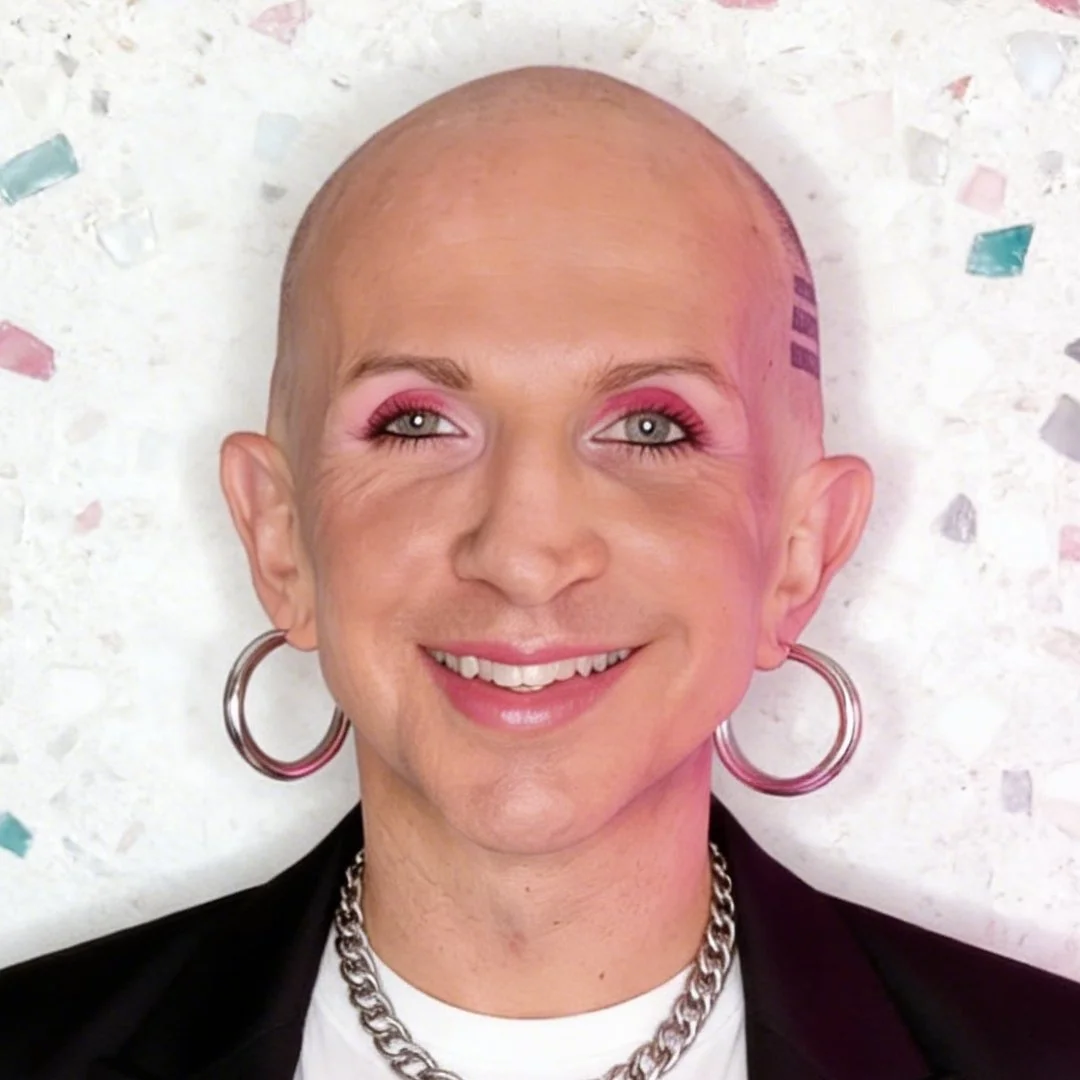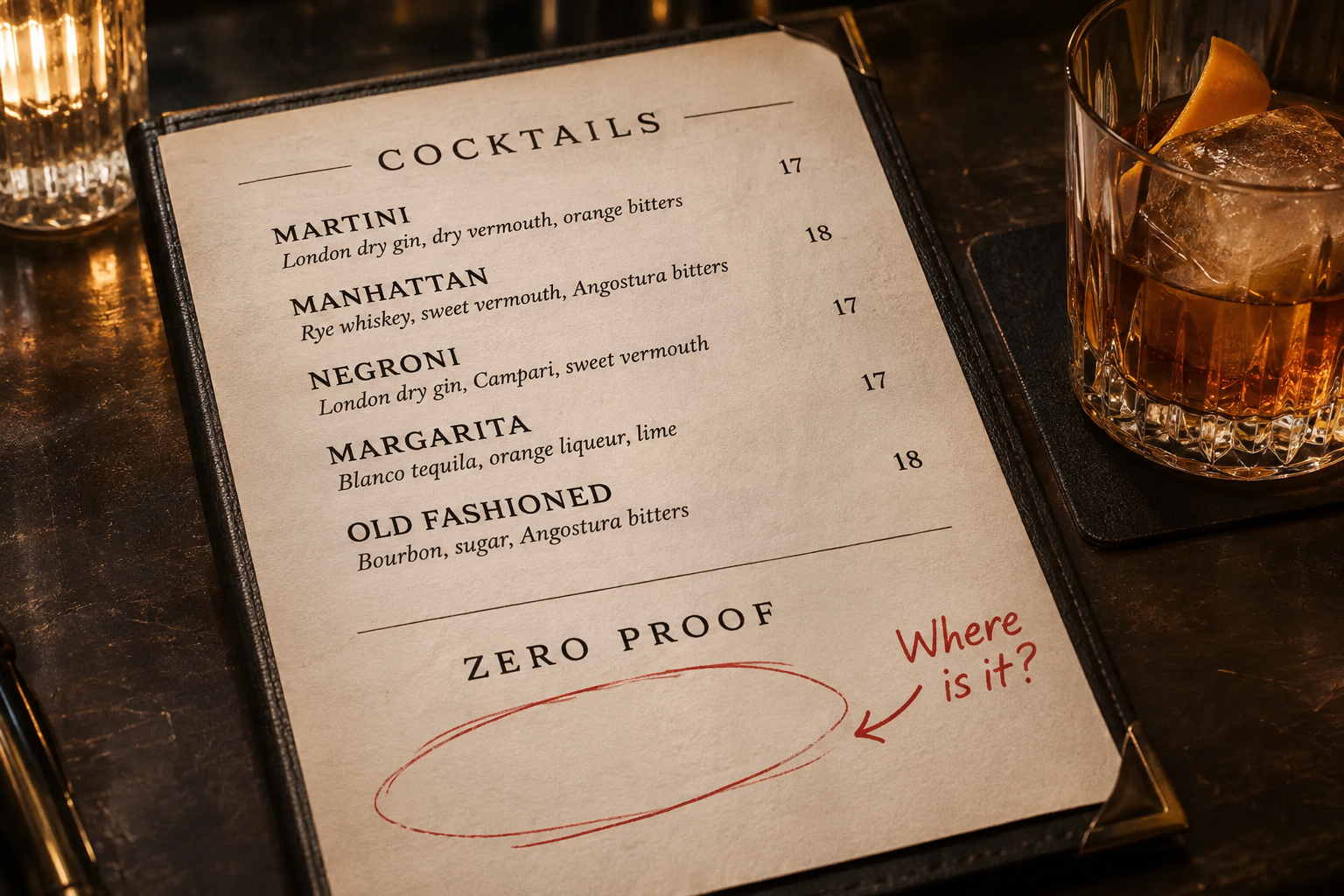
Zero-proof makers have spent years building better spirits. Amanda Chen thinks the harder work now is getting bars to build serious programs around them.
Before Amanda Chen founded Tomonotomo, she kept running into the same problem with zero-proof cocktails. She could make herself a good drink, sit down with friends, and watch everyone else finish a round and order another while hers seemed to last forever.
She knew how to build drinks. She had worked behind the bar and consulted for non-alcoholic brands. Still, something about these cocktails made finishing one feel like work.
People offered what seemed like an obvious explanation: Chen had stopped drinking alcohol, so maybe one drink was simply enough. She didn't buy it. She could sit in the same room and drink soda water all night. Why should a well-made zero-proof cocktail be harder to finish?
She started looking at what was in the glass.
Many of the early zero-proof spirits she worked with were designed around familiar alcoholic categories. Gin without alcohol. Whiskey without alcohol. Tequila without alcohol. The obvious way to use them was to take an existing recipe and swap the base.
In Chen's experience, that often created a new set of problems. A margarita is an easy example. Lime behaves differently when there is no ethanol in the drink. Some of the products she was working with already carried considerable acidity, so adding the usual lime could push a drink too far. Then came syrup to restore balance. Coconut water helped. Grapefruit helped. Pomegranate and pineapple helped. Before long she was stacking modifiers on top of each other and still fighting the base.
Eventually she realized what bothered her most.
"I'm trying to hide the spirit."
For a bartender, that is a strange place to end up. The base usually gives a cocktail its center of gravity. The rest of the drink supports it. Chen found herself piling ingredients into the glass because she didn't want the base to show.
That frustration became part of the thinking behind Tomonotomo, the zero-proof agave spirit she later founded. It also points toward a larger gap in the drinks industry. Zero-proof makers have spent years solving increasingly sophisticated product problems. Much of the bar world is still deciding how seriously to take the category.
The shelf filled up first
Chen remembers the early phase of non-alcoholic spirits as a period when almost any new bottle felt like progress. There simply weren't many options, so people were excited to see the shelf fill up.
The conditions are different now. There are enough products that makers, buyers, bartenders, and drinkers can start becoming selective. They can ask how something was made, what it contributes to a drink, whether the process holds up, and whether one product is more useful than another.
You can see that progression across the broader history of the category in the Zero Proof Project timeline, which traces the long development of drinking without alcohol and the modern products that eventually filled the shelf.
That change is showing up in the way Chen thinks about Tomonotomo.
During development, she initially tried to reproduce some of the sensations associated with mezcal. At one point she asked the scientist she was working with whether they could recreate the nail-polish aroma that can accompany alcohol. He told her they could produce something similar naturally from bananas.
Then he asked why she wanted her drink to smell like nail polish.
The question redirected the project. Chen started thinking less about copying every sensation associated with alcohol and more about what those sensations were doing in the first place.
Ethanol does a surprising amount of work inside a drink. It carries aroma and changes texture. It affects bitterness, dilution, temperature, and the way flavor reaches the palate. Take it away and the person making the bottle, and eventually the bartender using it, has decisions to make. I looked at those functions in more detail in What Replaces Alcohol in a Cocktail?
When Chen talks about Tomonotomo's ingredients, she often describes them by function. She says nutmeg contributes a slight numbing sensation. Fresh ginger supplies heat. Agave inulin and pineapple reduction contribute structure. Chiles add flavor and a smaller amount of kick. Each ingredient has a job.
That level of product development is happening while many bars remain much earlier in their relationship with the category. A serious cocktail program can offer a long list of drinks built around different spirits, techniques, and styles, then offer one alcohol-free option and consider the job finished.
Sometimes that drink is still juice, syrup, soda, and a garnish.
The problem is that guests increasingly have access to better options themselves.
A skilled bartender can certainly make shrubs, syrups, infusions, kombucha, house tonic, and sophisticated drinks without reaching for a bottled zero-proof spirit. Chen agrees with that. What she questions is why the existence of those skills makes a zero-proof bottle unnecessary.
Craft bars do not make every ingredient they use. They buy Campari. They buy vermouth, amari, and bitters because those products give the bartender something useful.
Zero-proof spirits can be judged on the same terms. Does the spirit contribute something valuable to the drink?
That question becomes more important as consumers learn the category. Someone can buy these bottles, find recipes, experiment at home, and discover what a good alcohol-free cocktail tastes like. If the drink they can make in their kitchen is better than the $14 alcohol-free option at a cocktail bar, the bar is no longer competing against water and soda. It is competing against the guest's own bar cart.
One cocktail is not much of a program
I asked Chen what a serious zero-proof offering should look like. Her starting point is three drinks: one long and refreshing, one shaken, and one stirred with the base spirit more prominent. From there, she'd like to see programs grow to five or six options, enough to give guests actual choice across different styles.
What matters just as much is where those drinks appear.
Chen doesn't want them hidden at the back of the menu beside Coke and sparkling water. A spirit-free section within the cocktail list works. So does identifying cocktails that can be made without alcohol. The exact structure can change from bar to bar, but the drinks should live inside the cocktail program.
There are bars already operating this way.
At Milly's in Brooklyn, master mixologist and co-owner Lynnette Marrero built low-alcohol, full-proof, and zero-proof drinks into the same list. Some drinks can move between categories. When Restaurant Business spoke with Marrero, she said non-alcoholic sales were outpacing spirits on some nights.
"It's a bar where everyone can get what they want," she told the publication.
That is a fairly simple ambition, but it changes how the category is treated. The zero-proof guest isn't being handed an alternate beverage menu. They're ordering from the bar.
Service can reinforce the same idea. Chen compares it with the way restaurants learned to ask about dietary restrictions. Beverage preferences can become part of that conversation too. A server or bartender can find out whether someone wants full proof, low proof, or no proof, then talk about the drinks from there.
That requires more than putting another bottle on the back bar. Staff needs to understand what it does.
The old recipes don't always transfer
Chen is adamant that bartenders shouldn't assume every zero-proof spirit will work as a direct replacement in every familiar cocktail.
With Tomonotomo, she finds Palomas and margaritas relatively easy to adapt. Other drinks require more attention because some of the basic mechanics have changed.
Dilution is one example. Traditional cocktails are often built with the expectation that ice will add water and bring a concentrated mixture into balance. A zero-proof drink starts somewhere else because the base itself contains considerably more water.
Chen responds by chilling ingredients ahead of time and reducing the amount of ice used during preparation. She often adds ice only at service. She also doesn't chase the same near-frozen temperature that works for many alcoholic cocktails because there is no ethanol warming the palate.
Acid and sweetness need the same reconsideration.
These sound like small adjustments until you consider how much of bartending is built on habits developed around alcohol. A bartender knows what stirring does to a Manhattan because generations of bartenders have worked on Manhattans. They know how a Martini changes as it warms and how much dilution an Old Fashioned can take.
Zero-proof cocktails are still developing that shared body of knowledge.
Chen has her own unsolved drinks. She still hasn't found a version of a Martini she likes. Vinegar can overwhelm the base, and she doesn't want to solve the problem by pouring an excessive amount of the spirit into the glass.
Her favorite cocktail is a Naked and Famous, traditionally made with mezcal, lime, yellow Chartreuse, and an Aperol-style bitter. She has the agave component. She is still waiting for the rest of the zero-proof shelf to give her versions of the other ingredients she trusts.
For a category that is sometimes marketed as though every old cocktail can simply be recreated without alcohol, that unfinished drink may be more useful than another perfect substitution.
What should the drink cost?
Price is another place where the category runs into old assumptions.
Chen regularly encounters the belief that a drink without alcohol should automatically cost less, as though the price of a cocktail is mostly a measure of how much ethanol is in the glass.
Her comparisons are deliberately ordinary. Decaf coffee doesn't suddenly become a lesser product because the caffeine is gone. Restaurants don't price a mushroom burger by calculating how much cheaper mushrooms are than beef.
Cocktail economics are more complicated than either analogy, of course, but the basic point holds. The guest is paying for ingredients, preparation, glassware, ice, labor, rent, service, and the skill of the person making the drink. We explored that question in more depth in Why a Drink Without Alcohol Can Still Cost $16.
Milly's offers a useful real-world comparison. Marrero told Restaurant Business that specialty alcoholic cocktails run about $16 to $17, classics around $15, and zero-proof drinks between $12 and $15. The prices aren't identical, but neither are the alcohol-free drinks treated like upgraded sodas.
Other bars make different calculations. Some price zero-proof a few dollars below their alcoholic cocktails to encourage trial. Others keep the price nearly equal because specialty ingredients and labor can cost just as much.
The important part for a bar program is being able to explain what the guest is paying for.
If an operator builds the alcohol-free drink as a cheaper, lesser version of the cocktail experience, the price will probably communicate exactly that. If the bar buys a serious base, develops a recipe, trains the staff, uses the same quality ice and glassware, and gives the bartender the same responsibility for balance, the economics start looking much more like the rest of the cocktail list.
There is also less room for a mediocre drink to hide.
Someone drinking alcohol may get another effect from the cocktail even when the liquid itself is forgettable. A sober guest doesn't get that consolation prize. If they came to a bar for a good alcohol-free drink, the drink has to do the work.
The second round
Chen's original frustration with the unfinished cocktail still follows her into her work with bars.
Tomonotomo's on-premise customers include what she calls switchers: accounts that already adopted a zero-proof program using earlier products and later began looking for another base. In some of those accounts, she says, guests were willing to order the first drink. They weren't necessarily ordering a second or third.
Her experience shouldn't be mistaken for a category-wide measurement. Most bars haven't reached that stage yet. Plenty still don't carry a zero-proof spirit or offer a serious alcohol-free cocktail program at all.
But the second round is a useful test for the places that have.
The idea also shows up beyond Chen's experience. Bartenders interviewed by Liquor.com about building better non-alcoholic programs have made a similar argument: the goal is to make the drink enticing enough that a guest wants another one.
Putting a drink on the menu proves that the bar offers it. A guest ordering one proves that something about it generated interest.
Then the normal standards of hospitality take over.
Was it balanced? Was it worth the price? Did the guest enjoy it enough to finish it? Would they come back for it? Do they want another?
Those are ordinary cocktail questions. They don't require a separate philosophy of sobriety or a defense of the category.
And that may be where a serious zero-proof program is ultimately headed: past the question of whether these drinks deserve a place on the menu, and into the much more interesting argument over whether this particular drink is any good.
Whether the acid is right.
Whether the bartender chose the right spirit.
Whether the guest wants another.
Zero Proof Week · November 8–14, 2026
Bring your brand into the category's biggest week.
A seven-day, trade-led content series putting professional bartenders and participating brands in front of the people shaping the category. Brands take part at three levels, from a single feature to headlining the week.
Founding-partner slots are limited for this inaugural year. Questions first? info@licensedtodistill.com